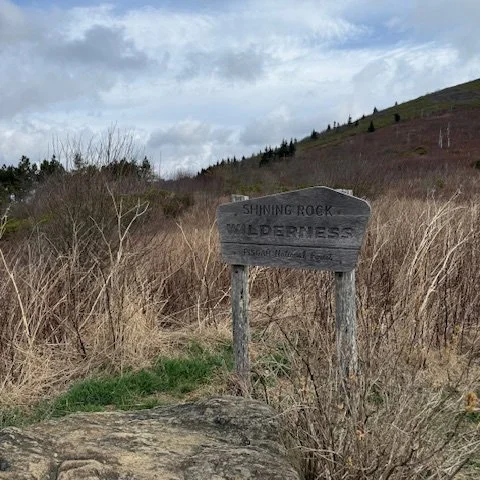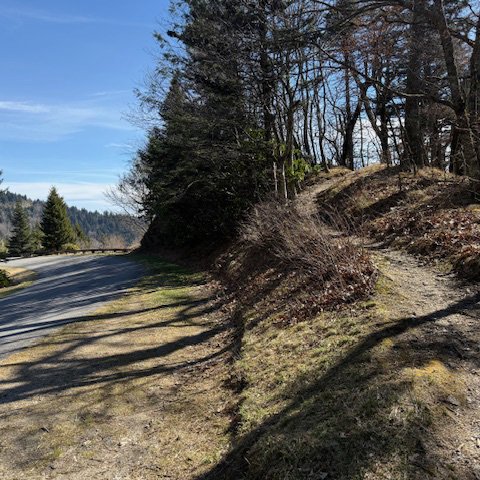
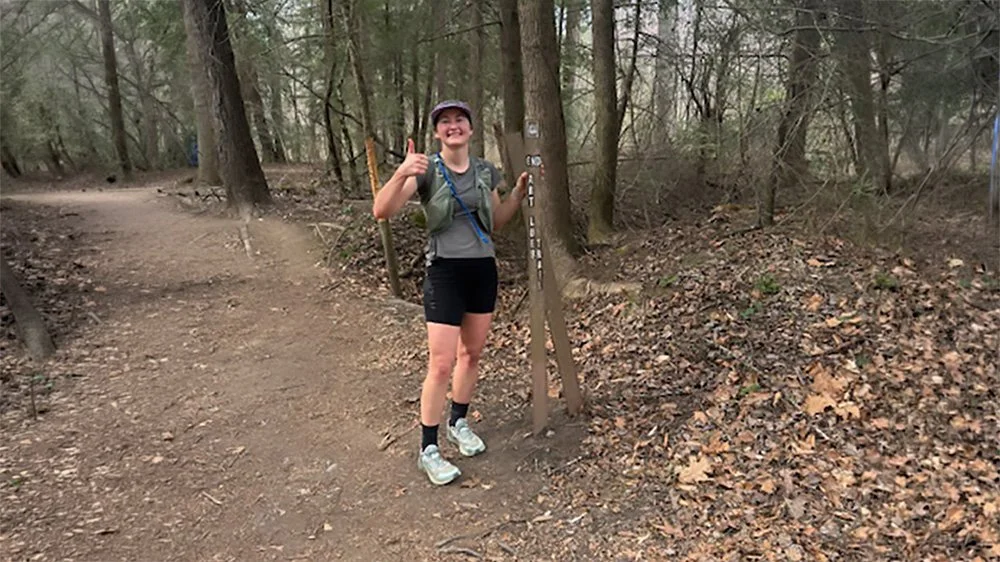
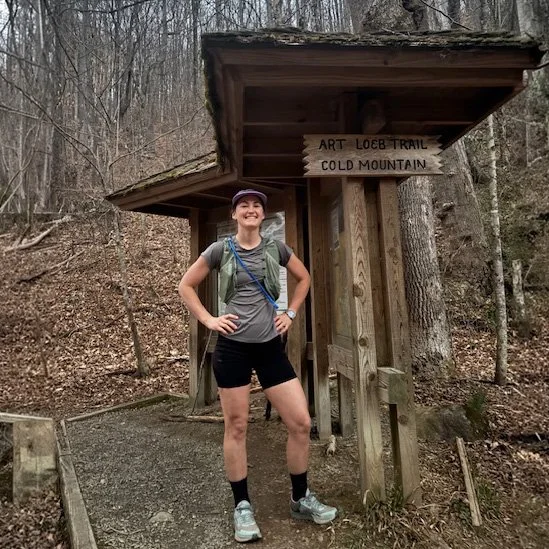
When Coach Emily started coaching at MPT and connecting more with the endurance community in Brevard, the Art Loeb Trail kept coming up. For many, it is a rite of passage, or maybe a bit of a hazing. Thirty miles, roughly 8,000 feet of climbing, and relentless terrain. Most people break it into two or three days, but for endurance athletes, the challenge is completing it all in one go.
She was open to others joining, but also curious to take it on unsupported to see what would happen. So she went solo. A friend from MPT, Ashley, met her at the Davidson River parking lot at the trail’s end and drove her to the start at Daniel Boone Boy Scout Camp. She began at 7:36am, just as the sun started to light the woods.
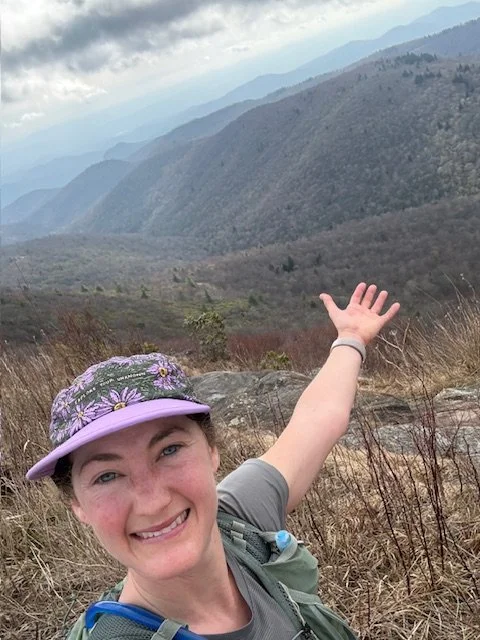
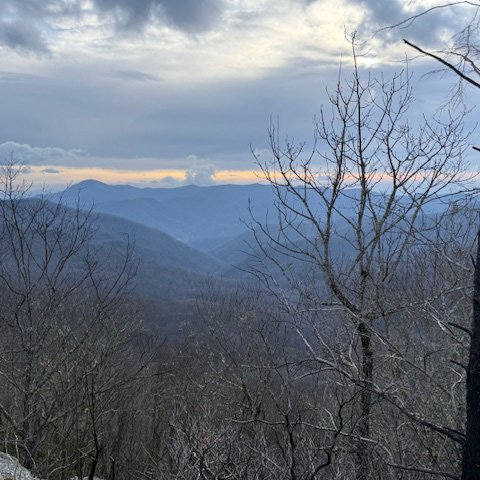
Early on, she felt great. Excited, ready, and taking in how different the first half of the trail felt compared to the sections near the Ranger District. Mossy rocks and roots, ridgelines, and open rock faces with wide mountain views had her moving with ease. For the first three to four hours, the effort felt almost effortless.
Shortly after crossing the parkway, conditions shifted. The temperature climbed, and water started running low. She had planned to filter at Deep Gap around mile 15 and again at Butter Gap near mile 21. Reaching Deep Gap, she expected relief but could not find water and had to keep moving.
The terrain stayed dry and exposed. As the miles added up, dehydration began to set in. Her hands swelled, her legs edged toward cramping, and her pace slowed. The focus became simple: get to Butter Gap.
From there, it turned into a steady, tactical effort. A few steps running, a few steps walking. Not pushing too hard, just continuing to move forward. When she reached Butter Gap, she refueled with water, electrolytes, and food. After about 20 to 30 minutes, her body began to respond again.
With renewed energy, she moved into the final stretch, cruising the last miles toward the Davidson River.
Finish Time: 8 hours and 8 minutes.
HOW SHE PREPARED
Coach Emily does not come from a traditional ultra-running background. Most weeks, her running consists of a single 4 to 8 mile trail run. Her primary focus is mountain biking.
Rather than overhaul everything, she built a plan that worked for her. She gave herself a year to prepare, choosing a March attempt to avoid winter conditions and fall riding season.
Her training focused on consistency. Two to three runs per week, including an easy run, a longer effort, and a mixed-intensity session. Alongside that, she stayed consistent with strength training, mobility work, yoga, and time on the bike.
There were setbacks along the way. Illness, ice, and snow disrupted training for weeks at a time. At one point, she considered giving up on the goal altogether.
Then, with four weeks to go, she completed a 23 mile run on part of the Art Loeb, her longest effort by a wide margin. Two weeks later, she followed it with a 20 mile trail run that confirmed it. She was ready.
WHAT RUNNING MEANS TO HER
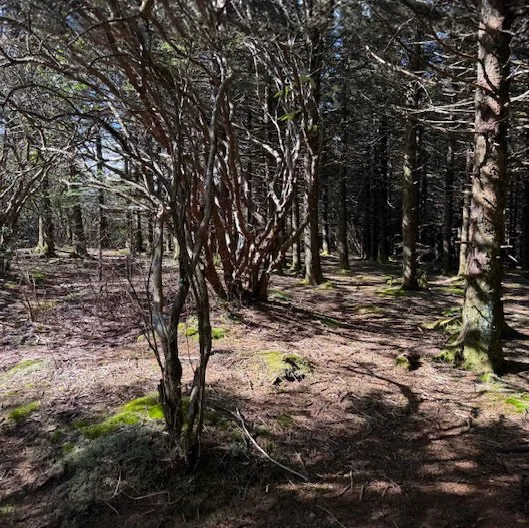
For Coach Emily, running has always been about freedom. It is a space for adventure, challenge, and stepping away from structured competition.
Coming from a competitive soccer background, running was once tied to performance. Now, it is something different. A way to think, to move, to explore, and sometimes just to be outside. Most of her runs are solo, often with her dog, without pressure or expectation.
THE TAKEAWAY
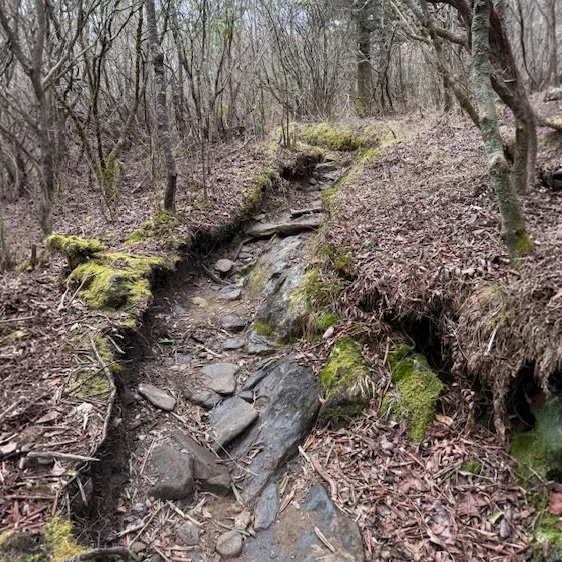
The Art Loeb is not just a physical challenge. It is a mental one. Long stretches without water, changing conditions, and constant elevation force athletes to confront their limits.
This experience reflects the same principles emphasized every day at MPT. Progress comes from consistency, smart training, proper recovery, and the ability to adapt when things do not go as planned.
Coach Emily’s approach shows that preparation does not have to be perfect. Strength, resilience, and confidence are built over time through steady work and a willingness to keep going.
Whether it is a 30 mile effort on the Art Loeb or preparing for everyday movement, the goal remains the same. Build a body that can handle challenges, recover well, and continue showing up for the long run.